G. is a career-driven transgender Muslim woman living in Malaysia. She is a designer and runs her own business. Her success comes despite – or maybe because of – the deep-rooted discrimination and stigmatisation against women like her. Her earlier struggles have equipped her with a steely determination and resourcefulness that she channelled into building her business.
One rainy evening a few years ago, G,. and others like her, found themselves in the back of a small lorry, swerving down a narrow winding road on the edge of a ravine, heading to God knows where. The women held on for dear life, slipping and sliding along the narrow benches. Of course, there were no seatbelts, and definitely no insurance. “The lorry did not slow down at all. At one point, we thought it was going to tip over and roll into the ravine. If I died there, it would be for nothing,” says G.
The near death experience ended when the lorry pulled into the driveway of what looked like a motivational camp site, replete with an outdoor obstacle course and the usual faux wood aesthetic.
The women were participants in mukhayyam, a government-funded series of activities targeted at the LGBTQ community in Malaysia. Mukhayyam includes Quran lessons, talks on health, and motivational boot camps like this one.
The camp is “voluntary”, but many don’t choose to be there. The camp’s itinerary is focused on rough and tumble outdoor activities aimed at toughening up effeminate trans women, group activities, and spiritual lessons to get them to “return to the rightful path”. This ingenious two-pronged physical and spiritual approach would be able to heal them and free them from their burden of sexual confusion, according to the advertising. To be frank, it’s all probably just part of the religious authorities’ way of justifying the billions of ringgit in funding they receive from the government each year.
At the end of the camp, the participants would declare themselves repented and be rewarded with a small financial token. “I think most of the women, like me, put the money in their purses and just continued to live like before. Thank you very much for the money!,” says G.
Many trans women like G. consider themselves spiritual and still practise religion to some extent, but their various experiences with the religious authorities have left a bitter aftertaste. As a result, they are far less likely to seek mental health and spiritual support for fear of being judged and rejected. Pushed to their limits, they are also more likely to leave religion, disillusioned by the constant religious policing, control, and systemic discrimination.
Apostasy is a crime in Malaysia, a fact well-known to C., a trans woman who left Malaysia to seek asylum in Europe. She came out to her conservative Muslim family and was immediately disowned. “Even before I started transitioning, I tried to be religious. I really did everything I could to find the answers, but I just could not accept how religion justified how my own family treated me. Eventually, I decided religion was not for me,” she says.
Another trans woman, R., considers herself a practising Muslim. She prefers to do things on her own terms, praying and reciting the Quran in the privacy of her home. When she prays, her aurat is respectfully covered in the women’s tradition, something that would not be accepted at a mosque.
“My relationship with God is personal. I’ve been told that God won’t accept me, but I think only God has the right to determine that. Religion is simple, but people make it complicated,” she says.
In cultures like ours, mental health and spirituality are deeply interwoven. As an 18 year old college student, I suffered from bouts of depression, largely attributed to my then-undiagnosed ADHD and struggles with my gender identity, sexual orientation, and aversion to the religious and racial indoctrination in my public university. I sought help from a university counsellor, largely because it was free. As I cried in her office and told her how I had attempted suicide, she asked me when I last prayed. She gently suggested my troubles were because I didn’t pray. If I prayed I wouldn’t like women or feel suicidal. “Suicide and being gay are the biggest sins, and you should know that. Once you attempt to end your life, God will turn His back on you.”
I sat there dumbfounded. What the fuck, lady! I came here for help! You’re supposed to be a medical professional! I tried to compute her logic and couldn’t connect the dots, so I just got up and left without saying another word. I avoided seeking support, both spiritual and mental, for years after that. And after an unpleasant experience with the religious authorities in my 20s, I decided I was done with religion. I was just going to live by my philosophy of “Don’t be an asshole”.
Without a religion to conform to, I began to study various belief systems out of sheer curiosity to better understand their context and original intention. I approached the holy texts from a purely analytical angle, comparing the various interpretations of verses with the politics and events of the time. I watched hours of debates and discussions on YouTube, and sought answers from my more religiously-educated peers. My nonconformity helped me view things objectively, and I saw how important religion can be for some. I also saw that one needed compassion, above piety, to truly embody the message in the texts. Compassion isn’t automatic for some, unfortunately.
Believing in something – or not – is a personal choice. Reconciling your beliefs with your identity as a trans person is like merging the two largest aspects of your existence, with the aim of self- acceptance and self-love. Many of us grew up denying our truths and internalising the transphobia we saw around us, so it’s hard to make that connection. It’s not impossible, though.
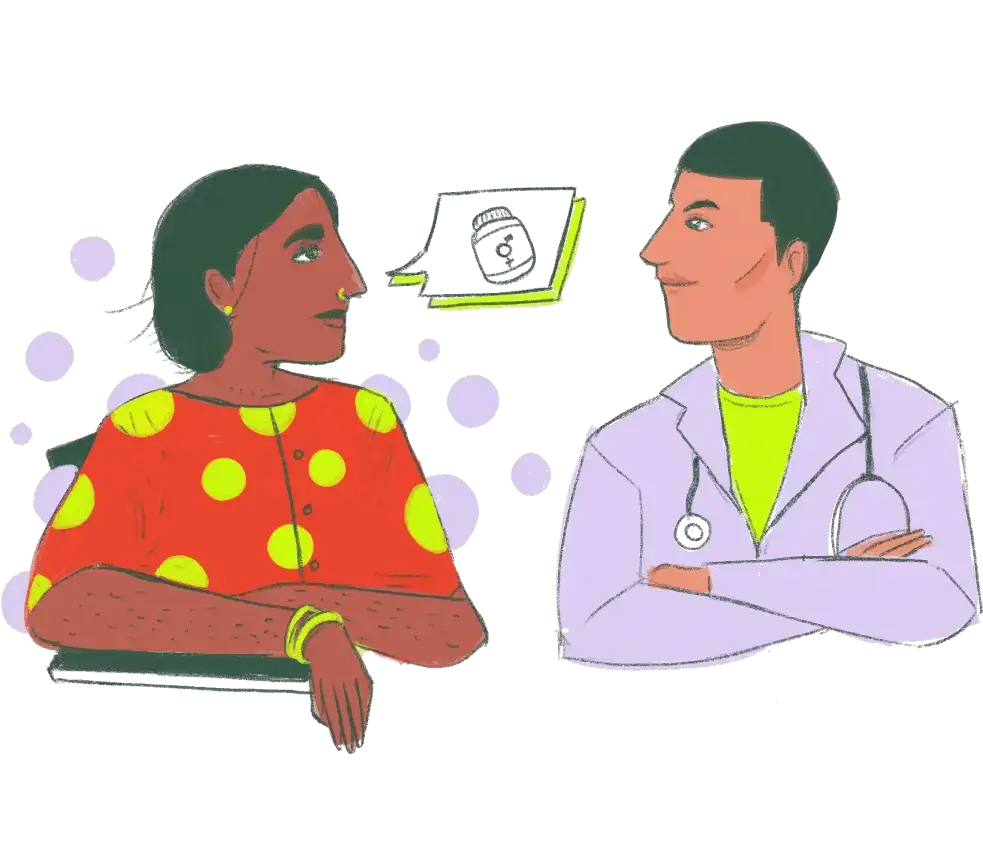
While there are queer-affirming spiritual associations out there, like the Queer Muslim Project, LGBTS Christian Church, or this religious school for transwomen, you may want to seek guidance on your own if these aren’t immediately accessible to you.
How to know if someone is the right spiritual guide
In the sea of spiritual guides, most of whom are openly opposed to queer folks, how do you find someone who can help you make that reconciliation, first of all, within yourself, and then with the religion that is part of your identity?
A queer-affirming spiritual guide is someone who affirms your sexual orientation, gender identity and expression, regardless of your reasons for seeking guidance. The key word here is “affirm”. Being “neutral” doesn’t allow them to be empathetic or understanding of your situation, and there are many things that queer folks struggle with that aren’t immediately obvious to cis-gendered heterosexual folks. Neutral leaves plenty of room for them to suggest a mukhayyam staycation if they think that’s what you need.
Without putting yourself at risk, you can start by getting straight to the point. Ask them how they feel about trans people. Ask them if they think conversion therapy is a good idea. You’ll be able to gauge where they stand on the support spectrum. If they support “reverting to the rightful path”, they are clearly of the mindset that your queerness is an illness that needs to be cured. Sashay away, no need to stay.
Ask them why they decided to become a spiritual guide. This way, you can find out what their motivations are and align them with your reasons for seeking guidance. If they don’t click, then nope.
When you start talking about your relationships and personal life, watch their reaction. If you tell them that you’ve left religion or stopped practising, for any reason at all, listen to how they answer. If they are clearly uncomfortable, end the conversation, and get out. It’s not about how many degrees they have on the wall, or if they’ve studied religion abroad, or if they’ve memorised the holy scriptures; it’s about their own attitude towards acceptance.
A good spiritual guide should be non-judgmental and accepting of all. They are obligated to create a safe space. However, a common approach is “love the sinner, hate the sin” which doesn’t guarantee your safety. This just means they’ve already determined that you’re wrong and doomed to eternal hellfire – unless they can save you.
Love from a higher being isn’t only for the select few that deserve it. A spiritual guide should help you see that big love, no matter who you are, and help you find your inner peace.
For more references on queerness and spirituality, check out these links:
https://www.asahi.com/ajw/articles/14567552
https://inclusivemosque.org/ https://qspirit.net/top-lgbtq-christian-books-2021/