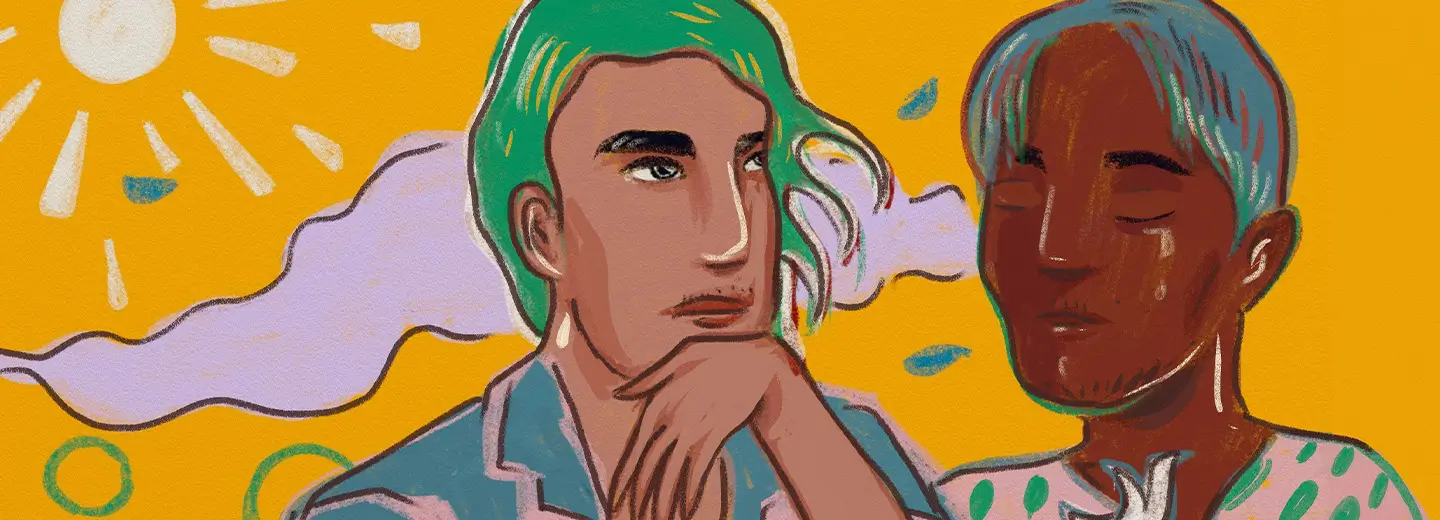
A parent’s love is unconditional, and a child will always seek their love and acceptance. Throughout your life, that relationship will be tested again and again. The parent-child bond is both so strong, and yet so fragile. Which way will the pendulum swing when you tell them you are trans?
You owe it to yourself to live your best, most authentic, life. You deserve happiness as much as the next person, but will that come at a cost that is too painful? Will your parents take it in their stride, or will they turn away and shut you out? Is it worth hiding the best parts of yourself to spare them the pain? Do you tell them now, or risk being outed by someone else? How do you gauge how much room there is for both sides to be heard?
These questions weighed heavily on me throughout my young adult life. It took me years to muster the courage to tell my parents my truth. I was already independent by then, making my own way through the world on my own terms, but my family was my home. I couldn’t base that home on a lie, pretending to be someone I wasn’t and living a double life. The anxiety I felt each time I visited them slowly ate away at my being, and I felt unhappy and incomplete.
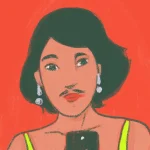
My unveiling ceremony did not go well at all. Time was running out. I had to get this huge weight off my chest, at least before I started my hormone shots later that year. I should say it now, or else I’d have to explain my moustache in the future. I’d never felt more nervous in my life.
(For some context, I was assigned female at birth. I thought I was a lesbian, and then it turned out that I was trans. I never came out to my parents as gay, which would have required two unveilings at separate intervals in my life and even more explaining.)
I was in the kitchen peeling potatoes and chatting with my mother when I made the announcement. I was going to transition to male. She dropped the bowl of rice that she was washing, and it clattered on the floor, spilling its contents. The spilled rice was almost ominous. She sat down and tears started streaming down her face while she muttered all kinds of prayers. I couldn’t bring myself to say anything.
My father came back from the market, entering the back door holding a bag of fish. He saw my mum crying hysterically while I stood with a potato in my hand.
Dad: What’s going on? Why is your mum crying?
Mum: Your child wants to be a man!
Dad: Oh..is that all?
She started breathing heavily and sat down, clutching at her heaving chest.
Mum: I can’t take this! *thumps chest, wailing* Ya, Allah, my heart!
Dad: Goodness’ sake, calm down! Drink some water. No one’s dying.
He put the fish into the freezer and took me into the living room.
Dad: Why don’t you tell me, slowly, what you told her?
Me: I’m going to transition to male. I’m going to start taking hormones in December.
He didn’t seem surprised at all. He’s a very analytical person, so he tried to find a reason, or something, to blame it on.
Dad: Is it because you have so many LGBT friends? Were you influenced by them?
Me: What…no! I’ve always been like this. I just have friends who are like me.
Dad: It’s the Western influence, isn’t it? You’ve been raised too much like white people. Maybe we should have raised you to be more familiar with religion.
Me: Pa, you’ve been influenced by the anti-LGBT agenda in mainstream Malay media. All that stuff in Harian Metro and Utusan is rubbish, you know that. And what does religion have to do with this?
Dad: Hmmph…Utusan was a good paper in the 70s, when I was a writer. We criticised all parties openly. Who reads Metro and Utusan these days anyway? It’s for gossipy aunties.
Me: Whose Utusan is that on the sofa?
Dad: What? Well, you have to read papers from both sides. And you know who controls the media.
Me: Yeah, and it so happens this anti-LGBT agenda began around the whole Anwar* thing.
My mum overheard our conversation diverting to our favourite topic of politics and sobbed louder. My dad got the signal.
Dad: You know, I had gay friends in the 70s and 80s. I’m not anti-LGBT, I don’t discriminate. All these gays, I’m ok. Everyone was ok back then.
Me: Then why aren’t you ok with this now?
Dad: It’s not our culture.
Me: Your friends were gay and you were ok. It’s still the same culture.
My dad waved me off. He didn’t want to argue. At the same time, he had to make it look like he was making some kind of effort to “correct” me.
Dad: Don’t bring this up to your mum again. She watches too many teledramas. She’ll get a real heart attack next time.
This whole incident was forgotten by lunchtime. It’s amazing how easily our families can brush off something this significant. If you don’t acknowledge something, it doesn’t exist. If it doesn’t exist, nothing changes, and we can go on pretending. It’s all about keeping up appearances. And my family isn’t great in the “talking about our feelings” department.
It was a false start. While I was happy it didn’t matter to my father, I still had to juggle my mother’s feelings each time I visited them over the next few years. I would avoid large family gatherings because I didn’t want to embarrass my mother. During the Eid celebrations, I’d be in the kitchen doing the dishes so I wouldn’t have to talk to anyone. It was a great escape plan because there were a lot of dishes and no one to wash them.
We went on with our lives like the unveiling never happened. My mother would still refer to me as her daughter, and when I came home with my moustache, she would tell me to shave it off. My voice broke, my body changed, and I was showing obvious signs of balding. Still, she refused to acknowledge me. It felt like she was looking right through me, like I wasn’t there.
I understand her reaction and I don’t blame her at all. She’d always seen me as her little girl. As a baby I was pretty chubby, and when she took me to the market the aunties would pinch my cheeks and give me treats. She dressed me in cute poofy outfits. As I got older, I rebelled against her fashion choices. She tried to push me towards makeup and heels, and I pulled further away. She criticised my “manly” behaviour. She was so proud when she bought me my first training bra, but deep inside, I was miserable. We just couldn’t relate to each other, and in many ways, I feel like I failed her. We’re still trying to heal from that. From her perspective, she thought she’d lost her daughter. I wasn’t dead, but her idea of me had died. She needed space to grieve. I had become a stranger to her.
I don’t think my dad really knew how to parent, which was probably good for me. If I asked him to read to me he’d pick one of his books on the mafia and explain it in detail. He let me have a puff of his cigarette when I asked him if it tasted good. Whenever I got into trouble, my mum would say “Wait til I tell your father”, but I never took it as a threat because he never actually punished us kids. In preschool, I was labeled “difficult” because I refused to follow boring class activities and would fight anyone who challenged me. After an incident when I got angry at my teacher and stomped on her foot, my dad was called in. He didn’t say anything to me. Instead, he took me to a toy store and got me a battery-powered helicopter and let me sit on his lap and steer the car up our driveway (this was the late 80s). I never did find out what the talk was about, but shortly after that, I changed schools and became much more sociable.
My dad was distant and awkward in some ways, the result of his own childhood trauma, but he always meant well. It was this distance that made me idolise him even more. I wanted to be just like him – big, strong, and well-read. Whenever I had a problem, I could always count on him to provide a solution.
In my teens, my family went through a rough patch. My parents’ relationship was always rocky, and all those years of frustration on both sides came to a boiling point, right when I was finishing high school. I left home for uni, and things got worse. My dad lost his business and went bankrupt, and we had to sell everything we had and leave the city. I dropped out of uni to work so I could support them and get my older brother through his last semester.
My hero was defeated. My dad’s spirit was crushed. He didn’t say it, but I saw it in his eyes and in all the weight he’d lost. He would take all his frustrations out on us and our relationship fell apart. I was resentful and blamed him for my lost youth and lack of qualifications. I was immature.
I thought I hated him, when in reality, he was my ally all along. He accepted me even before I accepted myself. Later on, I began to spend more time with him, and we slowly healed. I realise now how we are so much alike. It’s scary. I even look like a younger copy paste version of him. He calls me every day just to chat.
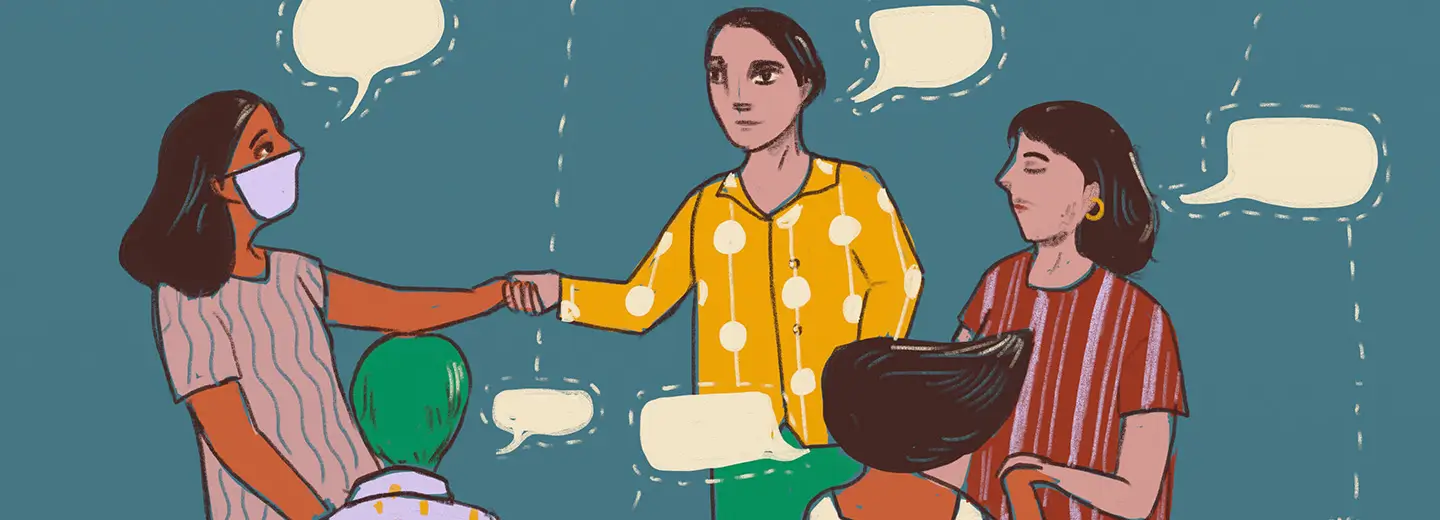
Years had gone by since Unveiling 1.0, and the anxiety kept coming back in bigger and bigger waves. I had to address it. After a long afternoon helping my dad fix the plumbing, I sat them down for tea and Unveiling 2.0.
Me: I think it’s time we talk about the thing we don’t want to talk about. We’re all adults, we can have an open and honest discussion, and I’m happy to answer any questions.
I’m a man. My friends have accepted me. My workplace is ok with it.
Dad: You know, in the 80s…
Mum: I don’t like it. It’s wrong.
Me: Well, research shows that it isn’t. It’s in our brains.
Dad: Oh yes, betul tu. It’s in the science.
Mum: I don’t care about the science. What about everyone else? What if you get hurt? Why do you have to do this?
Me: I know that you’re worried about me because this country doesn’t accept me. I know that, and I’ve accepted the risks. I know who to contact if I’m in trouble. We all help each other.
Dad: It’s all politics anyway. It’s hard to change that.
Me: I do some work for a lot of people who are trying to change that, and my band is very open. I know it might not happen in my generation, but at least we can try to make it better for the next one.
Dad: That’s good.
Mum: Yes yes, but why must you be LGBT? Why can’t you just help the LGBT people without being LGBT?
Me: But I’m happy. I’m happier than I’ve ever been in my life. You know I’ve always been this way, and now I’m myself. Isn’t that what you want for me?
Dad: It’s good that you’re happy.
Mum: I can’t take it when our relatives talk behind your back. They don’t say it to my face, they don’t say it to you, but I know it!
Me: I really don’t care what they say about me. Whatever they think, it’s their problem, not yours. It’s not like I’m a murderer or anything.
Dad: That’s just what they do. What can we do anyway? Break into their houses and stop them gossipping?
Mum: I can’t accept it. It’s wrong, it’s not our way. What happens when you die? When they arrange your body, they will see everything! They will see down there. They will bury you as a woman.
Me: Well, I’ll be dead so it won’t matter to me.
Dad: (laughs) We’ll all be dead by then.
Mum: Who’s going to arrange your funeral? How will you be buried? How are you going to answer to God?
Me: (My sister) and (my friend) will know what to do. I’ve entrusted them. I’ll think of something to say to God. I’m sure He’ll be fine. I mean, I’m ok now right? I try to be a decent person. Isn’t that what matters?
Dad: There are worse things to be than this. Why are we worrying about this? There are so many other problems in the world. Look at the state of the nation. Corruption everywhere, people don’t have jobs…
Mum: Your father encouraged you too much. He let you wear pants and play football and watch The Godfather when you were too young. He put you in karate class and let you fight the bigger kids when you should have been learning piano like Aunty (family friend)’s daughters. I should have stopped it.
Dad: It’s my fault now?
Me: What does The Godfather have to do with this? I don’t think learning piano would have made a difference. I would be a piano-playing trans man.
Mum: I should have been more strict with you. Letting you run wild, climbing trees. It’s my fault. I must have done something wrong in my life and I’m being punished.
Me: Ma, it’s no one’s fault. You didn’t do anything wrong. You guys raised me well.
Mum: Why don’t you just shave your moustache and grow your hair long? You had such nice curls and now you’re bald! I don’t care about your men’s clothes, women wear men’s clothes now, it’s fashionable.
Me: I’m bald because Pa is bald. I can’t grow my hair. There is no hair to grow. It would look strange.
Mum: You’re a woman and that’s that. You’re my baby girl, my daughter.
Me: If that’s what you’ve decided, I can’t change your mind. But I’m not going to change.
Mum: And don’t get too involved with this LGBT stuff. You’ll go to prison.
Dad: In the 70s I was expelled from uni for participating in the student protests. If we have a voice, use it.
Mum: That was about other things. That’s why you didn’t finish your degree. (My dead name) is running around the streets shouting LGBT slogans. Gay this, gay that.
Me: No one is shouting anything.
Mum: END OF CONVERSATION. I’m going to make dinner. You need to go to the shop and get some eggs. And don’t go to prison.
Me: I’m not going to prison, I’m going to the shop.
—
And that was that. I didn’t get the happy ending that we see on TV or read about on Reddit threads. I got 50% closure, at least, and I’m ok with that.
I guess you could say that acceptance is a spectrum. If you’re accepted, yay. If you’re kicked out of the house, you know that it’s a complete break and that giving each other space may be the answer. It’s the area between complete acceptance and complete rejection that’s so hard to navigate, because there isn’t a final decision to dispute or accept. That’s the reality of the situation, especially in our culture.
Our culture is non-confrontational. Sensitive topics are rarely discussed openly with the kids. We’re taught that anger, sadness, and discomfort are feelings that you should suppress to avoid conflict. We’re also taught that parents always have the final say in your life as long as they live.
We all know that gay couple who have been together forever and their families are silently accepting of them after 15 years of bringing that “good friend” to family events. But with gender identity, it’s different. Gender roles – and conformity – are so ingrained into how we were raised that it’s hard to understand why someone would choose to reject the template and open themselves to rejection.
That’s why I’m ok with how things are now. I’ve acknowledged that I’ve done my best in starting the conversation, and I also recognise that it isn’t always black and white. I’m happy no one got hurt or had a heart attack during my unveiling, and I finally got that heavy weight off my chest. Speaking of chest, wait til I tell them about my top surgery.
*the sodomy trials for Anwar Ibrahim, former Malaysian Deputy Prime Minister (now Prime Minister!) which began in 1998 and sparked the Reformasi movement.