Growing up as a queer kid in India, I always thought of myself as a cis gay boy (and later man). The shift to transness happened when I was touching 24, a bit too late for my comfort. I’d have liked to be free from my self-imposed masculinity much earlier in life. Looking back, I know what stopped me from being me. I had never seen anyone like me. Brown, beautiful and unapologetic about their gender queerness. Alok Vaid Menon was all of the above, but I’ll come to that in a bit.
Glee, a musical television show, gave me the first example of transness I could relate to. Wade ‘Unique’ Adams, played by Alex Newell went through a lot of the same things I was going through. The character on the show was full of life but scared to shine bright because of bullies constantly knocking them down. At that point in time, I thought I was sympathising with their struggles. Deep down, I could realise that seeing them on screen, let me see a part of me. Maybe seeing my worst fears of ‘what if’ translated visually, made me deny myself for a few more years. It is terrifying, when the only trans person you know is you.
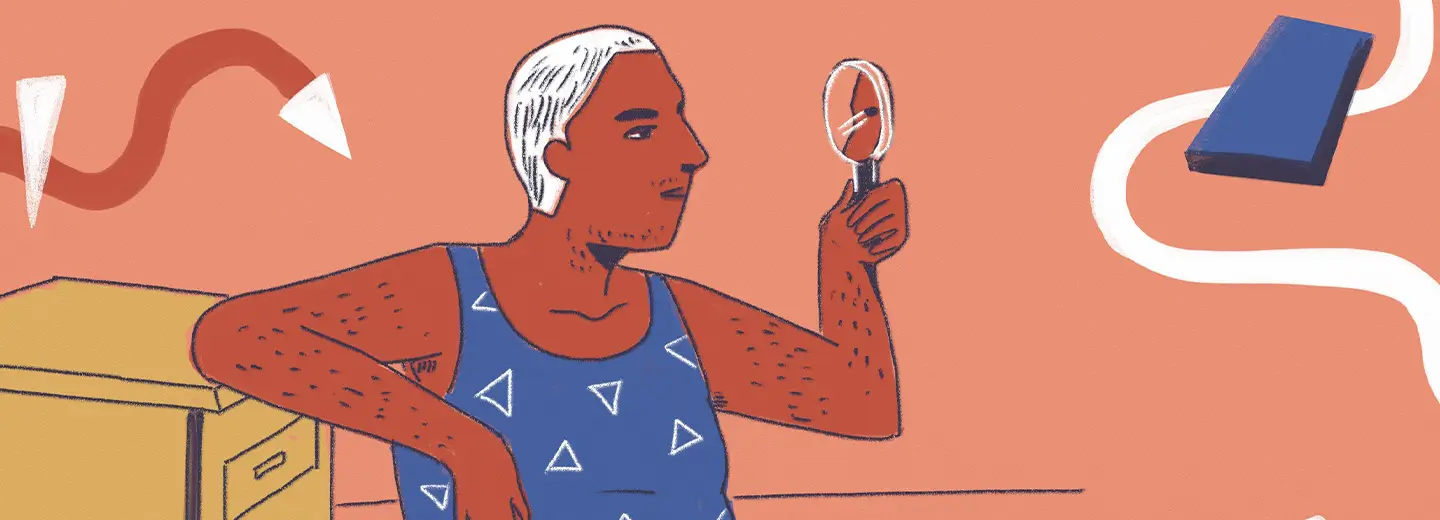
Alok Vaid Menon is a poet and artist whose work I was exposed to as a teen, but never really saw their gender expression as anything more than a performance. My gender is still a performance at times. Then again, aren’t most cis people actively performing their gender too? Conformity to certain expectations, both internal and external. It is because of these expectations that I refused to see Alok’s identity as authentic. It irked my preconceived notions of what it meant to be trans. When they were posting pictures of being femme with body hair, it made me angry. And then confused. I’d been secretly shaving myself to rid myself of the masculinity growing in clumps and tufts. I realised I didn’t need to anymore. It didn’t really hate the hair as much as the way I would be perceived with it. The anger towards Alok was misdirected. Seeing a person refuse to hide the parts that I’d been taught to hide, made me realise the cage I’d built for myself.
An important documentary called ‘Disclosure’ (Netflix) talks about how movies have wronged trans people since their inception. It’s a hard but necessary watch, especially for cis people, to start seeing things from a different lens. Sense8 was probably the first work of fiction I came across where the trans character seemed authentic and wasn’t catering to a cis gaze. Probably because the makers of the show (the Wachowski sisters) are trans themselves. I feel the same way about Jules’s character in Euphoria, whose transness was neither highlighted or invisibilized. The character was multidimensional, unlike a lot of trans characters that cis people write. This was largely due to the fact that the show had a transgender consultant and Hunter Schaffer (Jules) was actively involved in the creative process. This is probably the most important factor that can better trans representation, films and the impact it has on the people watching them. Trans people being in control of the narratives that concern them is largely unprecedented. Thankfully, this has shifted somewhat in the last few years due to social media. The world has always stared, fetishized and been mesmerised by us. Why not take advantage of it? Jeffrey Marsh, Mx Deran and Ezra Michel are just some of the many trans influencers who have taken centre stage and are restructuring the conversations about queerness. They allow young queer people a look into their world, something which wasn’t possible before the age of influencers. Maybe if this visibility and perspective was available to me as a child, I would have transitioned a lot sooner. Maybe all the hurt and confusion in my formative years would have been minimised, knowing that my experiences and dysphoria weren’t unprecedented. I’m valid and worthy of love and compassion. A simple fact like that took years for me to figure out.
A lot of celebrities have recently come out as non-binary/trans in recent years as well. Sam Smith, Demi Lovato and Elliot Page are some people in the public eye for whom the transition was seen world over. In fact, Elliot Page’s character in the The Umbrella Academy transitioned mimicking the actor playing it. Instances like this give hope to trans people world over, that though the going is tough, but the world around us is slowly changing for the better.
Of all the voices in the recent past, the one that had the greatest artistic significance was probably that of SOPHIE. They were an Avant Garde musician whose work spanned various genres and forever changed the scope of pop, hip-hop and electronic music. While a lot of transgender artists aren’t taken seriously, SOPHIE’s decision to stay anonymous may have stemmed from her insecurity of being perceived. When she did come out as a transwoman, she had already made a mark for herself as a serious artist. The passing away of the artist despite leaving a void, opened up avenues where other trans artists could take centre stage. PC music, a genre (some say) pioneered by SOPHIE, has an unusually high ratio of transgender musicians. Mainstream culture often starts as an underground movement, and the movement is incomplete without marginalised people. Artistic expression and innovation evolve as the fringes are allowed to take centre stage. I regret there being no mainstream expressions of trans joy and power as I was growing up. However, I am glad that the kids of today get to see a bestselling artist like Sam Smith being unapologetically queer, supported by the unabashed transness of their backup dancers. Or Laverne Cox, the first transgender person on the cover of Time magazine, after whom a Barbie was modelled. It gives me hope that the coming generations of children might grow up to be adults who find common ground with all kinds of people and make the world a kinder and safer place.