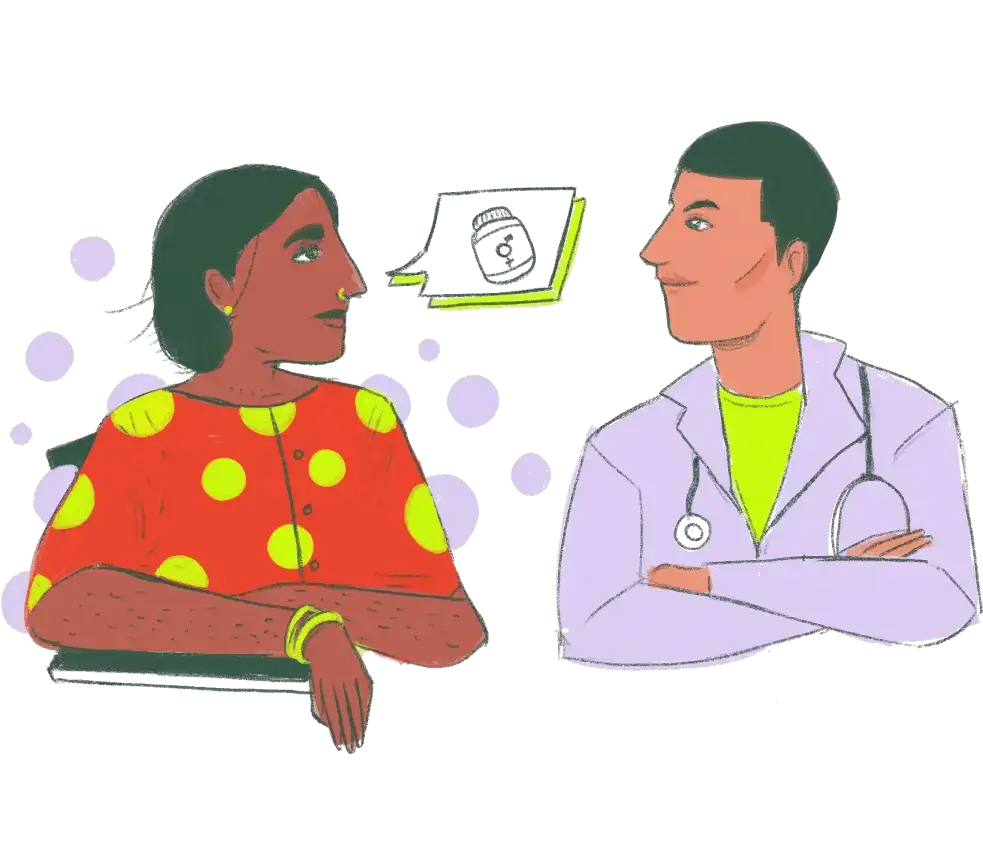
To detransition is a person’s way of saying they used to identify with a gender that was different from what was assigned at birth but now instead identify with the gender they were assigned at birth. Some detransitioners choose to no longer identify as transgender while some still do.
There are also levels of detransitioning. It is different for everyone but someone who has decided to socially transition for example may
- use pronouns that they were assigned at birth,
- or use a name that they were assigned at birth,
- or start expressing as the gender they were assigned at birth.
On the other hand, someone who wants to medically detransition would start the process of returning the primary sex hormone to the one that they were assigned at birth. They may also reverse surgeries if they feel like they need to (though not all are reversible).
The politics surrounding detransitioning
It is unfortunate that the transgender experience cannot be talked about without some mention of politics but this is even more true when discussing detransitioning. While the conservative movement has decided to once again make another minority group (the trans and gender non conforming community) its enemy, people who detransition have been completely weaponised.
A major conservative talking point against the trans community has always been that “transitioning is wrong”. It is “wrong” because everyone in the trans community is either “coerced” into transitioning or are “mentally ill” (both of which have been hugely discredited by every major medical organisation including those involved in psychiatry and endocrinology in the world).
Detransitioning therefore “proves” that those who transition were actually “just in a phase”. As seen in the United States, this is in line with conservative legislation of going against gender affirming care.
If you are here because you are questioning your transition journey and are considering detransitioning or have already begun to detransition, please know that you are completely valid. Gender is a spectrum, the LGBTQIA+ community has always advocated for this – we are meant to explore our gender identities throughout our lives and that can sometimes include detransitioning.
Weaponising the act of detransitioning has made it difficult to distinguish between genuine medical resources and communities from politically motivated ones. We would like to help.
The Gender Journey
The gender journey is a self reflective process to better understand your gender identity. It should teach you to appreciate and understand what you enjoy about the gender you identify with and whether or not you feel the need to identify as any other gender. Unknowingly a lot of people in the trans and detransition community have taken this journey as it determines what transitioning or detransitioning means individually and what steps we feel we need to take to feel comfortable being ourselves.
So how does it work? Well, the first step as with every major project that we need to undertake is to identify our objectives.
Question Everything & Reflect
You do this, by asking yourself questions. A lot of questions.
- Find out the qualities that you enjoy that are societally associated with the various gender identities.
- Focus on yourself and understand the stressors related to you wanting to transition and now to detransition, what caused them? Is it external? Is it gender dysphoria? Is it caused by a traumatic event? Is it a political belief? Is it related to religion? Is it family? It is important to examine all aspects of your life.
- Remember that there is no right way of doing this. Play around and have fun! Roleplay different genders to see what fits, change up your expression, or try a new pronoun with your trusted friends to see what fits.
Your Mental Health Is Important
There might be a lot of regret and anger associated with wanting to detransition, and that is okay! It is important to understand these feelings but it is just as important to acknowledge them. If you have access to a therapist and are comfortable with it, talk to one. Otherwise, consider seeking one out. Just remember to make sure to get one that understands that gender is a spectrum and that it is valid to detransition, just as it is to transition.
Look for a supportive detransitioning community
A community of people with your experiences can be extremely valuable, they can make you feel less alone and they can provide solidarity in shared experiences.
With how politically motivated the topics surrounding transitioning and detransitioning are however, it is important to find support that isn’t politically motivated. This is to help ensure that you are getting resources that are medically sound and receiving advice that does not have an ulterior motive. It is very easy to be preyed on and placed into a political pipeline when you are in a vulnerable state.
A good barometer is to find out if a community is transphobic. If they are transphobic, then they do not believe that gender is a spectrum and they invalidate the existence of gender diverse and transgender individuals. By doing so, they will be motivated by their beliefs to push you towards a detransitioning process that they find is acceptable and may not be one that you genuinely need for yourself.
Global Community recommendation: r/detrans_actually (reddit)
Global Resource recommendation: Detrans Voices
Detransitioning
If you feel you are ready, you can now decide on how far you want to detransition. Do you want to just detransition socially, medically or both. It is completely up to you.
Here is some important information when it comes to detransitioning medically.
Note: There are transgender people who medically detransition but still identify as trans – this may be due to not liking the effects of hormones, needing to stop due to medical reasons, or external factors making it difficult to continue (such as an unsupportive environment or financial reasons). If you fall under this category, this article will give you an idea of what to expect.
Detransition Medically
Just as transitioning is done in steps and with your individual needs and safety the main priority, same too is detransitioning. It is never one size fits all.
If you continue to have a functioning reproductive system, meaning nothing was removed through surgery then stopping gender-affirming hormone therapy will be the first step in detransitioning medically. Your reproductive gonads will give you the hormones you need to reverse the process of transitioning and reverse sexual characteristics you would have gotten from transitioning (with some exceptions.)
If you have gone through surgical procedures, then you will need to go through gender-affirming hormone therapy that fits the gender you now identify with ie: masculinisation if its man and feminisation if its woman or any of the 2, if you are gender non conforming.
Coming off GAHT will reverse most of the changes except for the ones listed below along with options on how to reverse them through other means.
If you went through Feminisation GAHT, everything will gradually be reversible except for:
| Irreversible Sexual Characteristics | Reversible Options |
| Breast Development | Chest Reduction Surgery |
| Fertility | Reversible depending on individual |
If you went through Masculinisation GAHT, everything will gradually be reversible except for:
| Irreversible Sexual Characteristics | Reversible Options |
| Deepening of the voice | Vocal Feminisation Coaching or Surgery (Trans women communities will have excellent resources) |
| Growth of facial and body hair | Hair removal practices such as tweezing, waxing etc. Or procedures such as IPL, laser, electrolysis etc |
| Male-pattern baldness (in some individuals) | Getting off GAHT halts the process, but in order to reverse, medications such as Minoxidil may be used as well as hair transplants |
| Enlargement of the clitoris | Clitoral Reduction Surgery (rare). Please seek an experienced surgeon for consultation. |
| Breast atrophy – possible shrinking and/or softening of breasts | Breast enlargement surgery |
Conclusion
Detransitioning is still in its infancy, there needs to be better understanding towards a person’s detransition journey. A person’s journey to detransition or to transition should never be included in any political movement and one person’s need to detransition is as valid as another person’s need to transition.
Everyone deserves informed care and support and should not be discriminated against or oppressed.